Recently we had family visit us from afar. The enjoyment of their arrival was fraught with anxiety too since we knew there needed to be a period of self-quarantine and PCR testing etcetera before we could merge our respective bubbles and enjoy each other’s company. But once that was all over, after taking a few logical moments to calm our newly wired defensive brains, we got into the groove of having them around, and enjoying their presence.
One morning the little ones were with us, and my husband decided to make paper masks for the kids by cutting holes for eyes, zigzag teeth, and funny noses out of paper. He turned to the four-year-old, who was not seeing what he had been doing up to that point and asked her if she would like a mask too. Her response was this: ‘No thank you. I left my nice mask in the hotel in Dubai by mistake. But I don’t want another one.’ Suddenly I realised what the word ‘mask’ means to our kids in todays’ world of the Covid19 global pandemic… and it saddened me.
My son, who is eight years old, said the other day: ‘Mom, I don’t remember what it is like to just walk up to someone randomly without a mask.’
Well, there you go. Masks in my day as a child were fun and playful. Today – not quite. Parents all over the world have tried to make this pandemic into a creative exercise with their kids. Videos are all over the internet sharing amazingly clever ideas. I particularly enjoyed watching one man leave his ‘lock down’ apartment with his kid to take out the trash. Everyday he turned this exercise into a creative one, dressing them both in costumes of fantasy and fun. Everyday the costume was different. The walk to the municipal dustbins was an adventure.
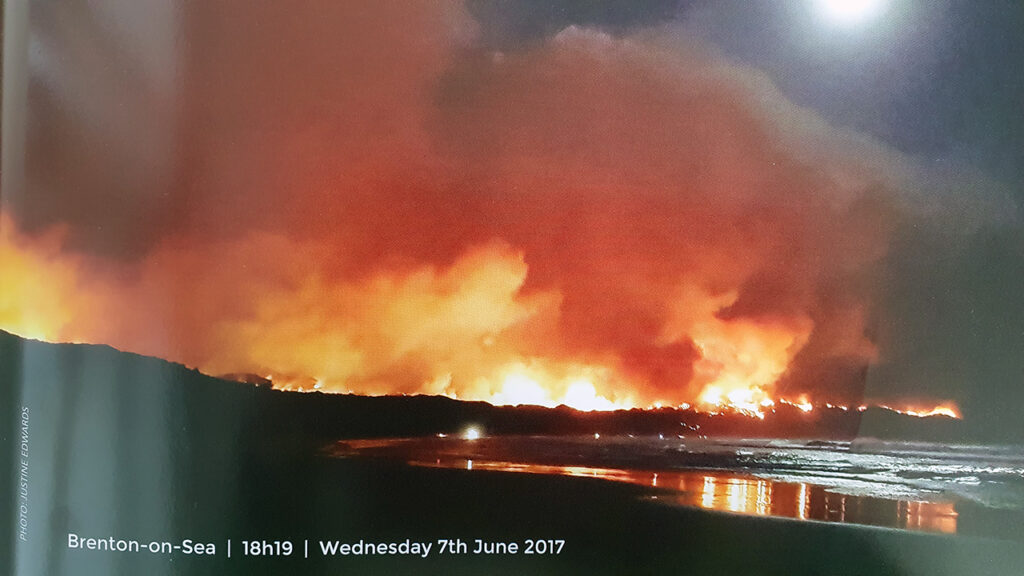
Four years ago, the town I live in was engulfed in fire. We were all evacuated from our homes and sadly many people lost their property. It was a scary ordeal, watching the infernal flames approaching for an entire day – not quite knowing what would happen one minute from the next. Our son was four at the time. We were congregated in a parking lot near the main beach of our area for most of the day. Where we were geographically meant we were completely cut off from our actual town by the fire. At the end of the afternoon, we were all evacuated by a procession of 4×4 vehicles to an area across the bay – approximately 2km’s away. The entire experience was extremely frightening… however, my husband, my daughter and I somehow managed to turn the tragic events of the day into an adventure for our son. As we watched our area become engulfed in fire as we were driven at pace in the back of a 4×4, our son was feeling the exhilaration of being in a vehicle with big tyres, speeding along the beach sand. When we were dumped in a ‘hopefully’ safe space between the flames in the west and east, our son saw this cottage as a holiday adventure – even though we had no food nor electricity.
The point I am making here is that perhaps we can take a leaf out of our kids’ books. Kids seem to somehow remove the drama naturally from dramatic circumstances. Adults seem to need to add more. Of course, I am not speaking about devastating circumstances, where kids are pulled into unusually dire misfortune. I think you know what I mean.
During times of crisis, we all glue ourselves to our phones to receive the latest information on the ordeal we are facing. During the initial moment of flight or fight, I feel this is important, so that we can learn where to go and what to do. Thank goodness for modern technology! However, as the crisis unfolds and the news agents begin broadcasting, everything begins to amplify. This is when one needs to begin filtering and this is not easy. All news stations which we receive so easily via the internet, all have a story to share – and the more sensational, the better they will sell. We as adults, especially at the beginning of the dramatic event, eat this up, fuelling our shock tanks to justify our feelings of fear and panic. Only recently in South Africa there was a terrible event of mass-scale looting and destruction in two major parts of the country. Even those – like us – who were not directly affected by it began feeling the panic set in. We were watching the images of horror on our phones and our minds were trying to figure out a ‘safety plan’ for the eventuality of it landing closer to us, and all of this amidst the peak of the third and more dangerous wave of covid-19 in our country. I watched the national news for 3 days and then realised that, once again I was getting sucked in. Getting sucked in is not healthy. It puts you in a state of mental flight and ‘fright’ and no rational thinking can then filter adequately.
So… how do we de-dramatize our thoughts during a time of upheaval, widespread crisis, and potential disaster? To be honest I am not even sure if this question is answerable. The only suggestion I can think of is becoming ‘mindful’ and completely present. When ever we feel that feeling of rushing panic, we need to perhaps pull ourselves back with this question: ‘Right now – am I safe? Right now, can I remain calm? Right now, can I turn this into an adventure? For example – all of us recently have been ‘locked down’ in our homes at some point. Perhaps instead of feeling ‘closed in’ we need to feel safely enveloped in our own space. Perhaps when sitting at a point of evacuation, instead of feeling terrified about the next move – enjoy the snack you have in hand, or the game you are playing with your kids to distract them. Perhaps, try to take one minute at a time.
I remember sitting on the cold windy beach during our fire experience and every time I felt mounting panic and anxiety invade my body, I looked around me. I saw so many elderly people getting on with their wait for safe evacuation, and thought ‘if they can, so can I’. I remember then also feeling the warmth of my windbreaker and seeing my animals and kids bundled into a duvet cover we had carried down with us and thought ‘how lucky we are to be warm right now.’ The feeling of being so very unsafe with the approaching fire, was momentarily abated with these little observations and thoughts.
During our first hard Covid-19 lockdown – even though we had lost our two businesses, I remember feeling overwhelming gratitude. I felt grateful for being able to do this ‘new’ experience with my family. I felt gratitude for having a comfortable home to do it in, and I felt gratitude for the fact that for the first time in my adult life, I was being told that I must ‘do’ nothing. I must not work. I must not go out. It felt like a gift – I was now able to play with my kids, read books, or binge watch Netflix without any guilt whatsoever! I know that I am very fortunate, hundreds of thousands across the world did not have the comfortable circumstances that I had during these trying times… but I suppose even for this reason alone, I felt exceptionally grateful. That period taught me how to put ‘being present’ into practice for the first time in my life.
The lesson I learnt during lock down of ‘being present’ did not come instantly. I had to shake off the habitual feeling of ‘running forward.’ We are all so accustomed to moving forward into the next moment, often without savouring the present one. A forced lockdown made me slow down and figure out how to snuggle down into the present moment. I began enjoying being home again. I became a better housekeeper. I got creative with my kids and things became quieter.
A year and a half later there have been moments where, despite being practiced at my new healthy habits, I too feel frustration at the length of time this global pandemic is taking to disappear – if it ever does. I too feel sorrow at the fact that our kids know the word mask as a tool of protection instead of playtime. I feel gutted that I can’t just pitch at my friends’ house for a cup of coffee in her lounge or enjoy a cappuccino in a busy coffeeshop without thoughts of fear and what ifs. So here my thoughts continue…
Looking at past pandemics and wars can help one gather perspective and patience once again. The Spanish Flu in the 18th century lasted a good part of two years… we are currently at 18 months give or take with Covid19. The horrific Black Death in the 13th century lasted approximately 5 years – and in those days the only way to survive was to self-isolate completely. Think of the first and second world war. WW1 – 4 years, WW2 – six years and one day! So… I ask this question. Is it because we now live in a world of instant everything (mail, telephone calls, information etc) that we are feeling so impatient, or is it just simply human nature? Did people during the world wars feel impatience too? I am sure they did. And so do we… despite the changed instant world we live in.
But here are my thoughts to conclude. We need to dig deep and find more patience. We need to keep our chins up – even if they are covered in masks. Here is an added thought – thank goodness we don’t have to carry around clumsy gasmasks like in WW1 and 2. Even wee little ones then were taught to carry and wear them. And guess what – a few years after the war ended, masks became playthings again and the gasmasks were forgotten. Our FFP2, KN95, surgical or cloth masks will be a thing of the past and our kids will enjoy making cut-out paper masks once again… I hope…
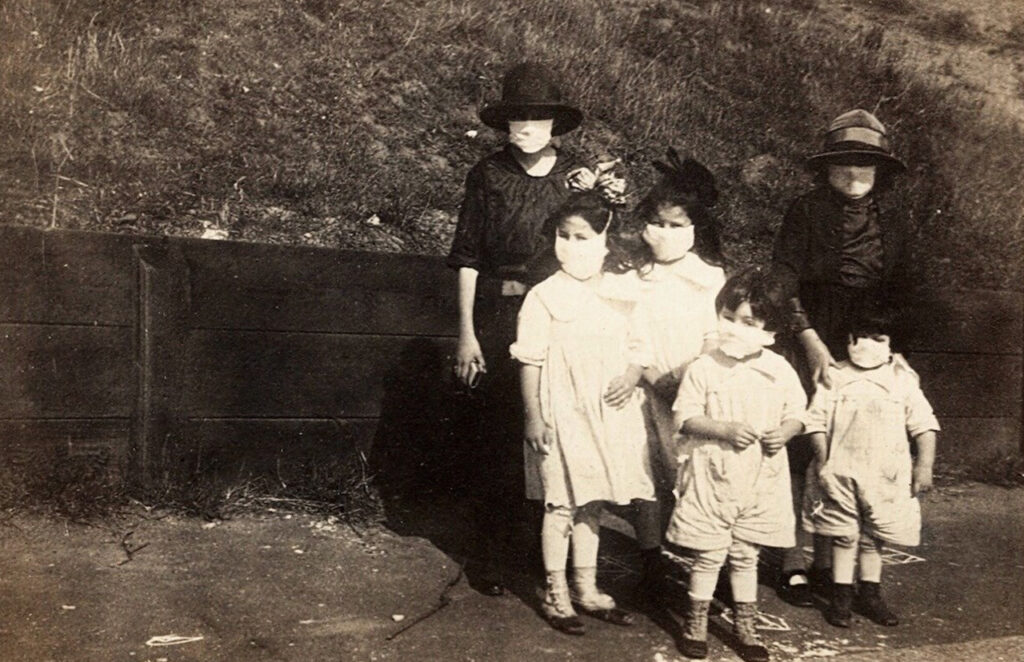
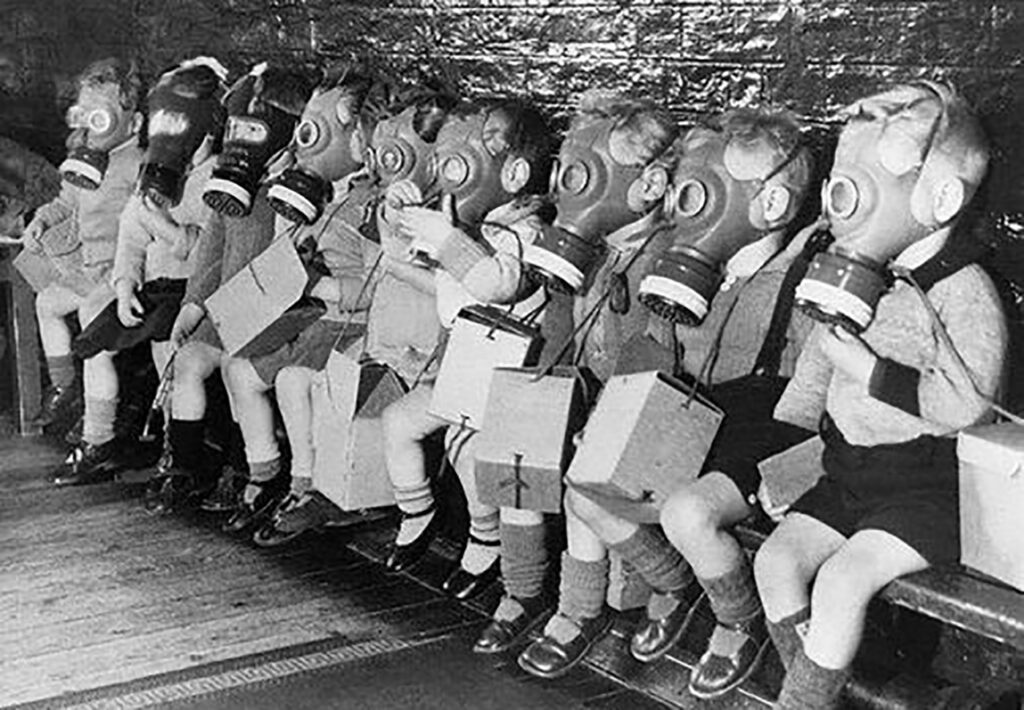
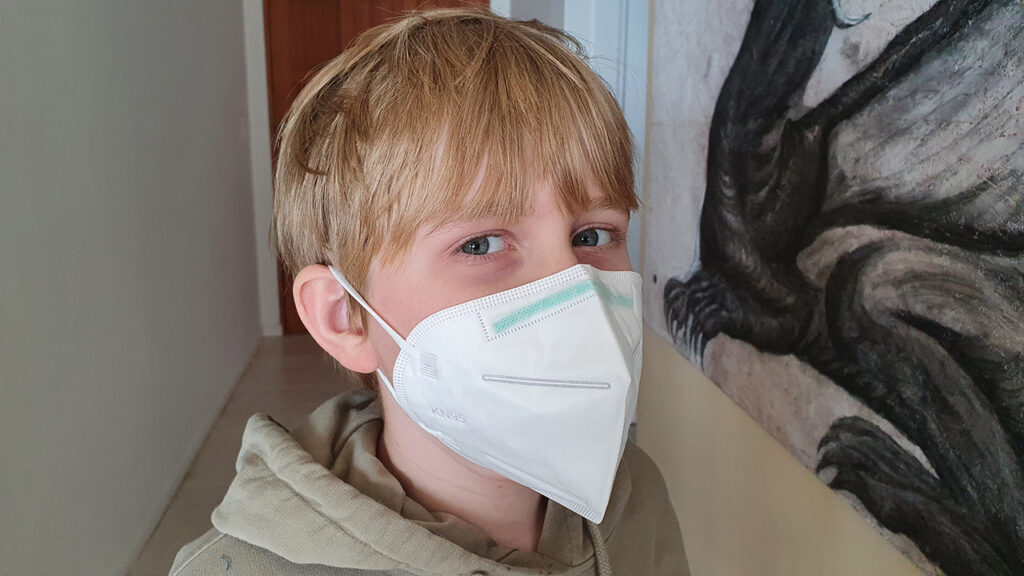
Image 2 – Kids with their gasmasks during WW2
Image 3 – My kid Leo with his KN95 mask during the Covid19 pandemic in 2021
… till then I will keep my chin up, try to remember to pull myself back into the present moment, consciously avoid an overload of toxic media, and smile.
Thanks for reading – please leave your thoughts in the comments below. Its always nice to share feelings, thoughts and experiences with one another.